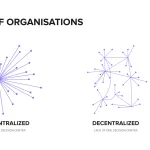
Let’s be honest. For most of modern history, our lives have been structured around centralized systems. Governments, corporations, banks—they’ve all acted as the grand organizers of society. But a quiet, then not-so-quiet, revolution is underway. It’s a shift from centralized power to individual sovereignty, and it’s being powered by a strange new kind of entity: the Decentralized Autonomous Organization, or DAO.
This isn’t just about crypto or remote work. It’s a fundamental rethinking of how we coordinate, create value, and assert our autonomy. The sovereign individual—a person leveraging technology to operate beyond traditional borders and institutions—is finding their ultimate tool in the DAO. Here’s the deal with this powerful convergence.
What Exactly is a Sovereign Individual, Anyway?
The term might sound lofty, maybe even a bit libertarian. But strip it down, and it’s a pretty straightforward concept. A sovereign individual is someone who uses digital tools to gain unprecedented control over their assets, data, and professional destiny. They’re not necessarily off-grid hermits; they’re often highly connected digital natives or savvy remote professionals.
Think about it. With a smartphone and an internet connection, you can now: bank with a global digital wallet, earn income in cryptocurrency from anywhere, learn skills from platforms outside formal education, and even obtain digital residency in some forward-thinking nations. The tools for personal and financial sovereignty are, well, already in our pockets. The pain point? Operating alone has limits. That’s where the collective power of decentralized autonomous organizations comes roaring in.
DAOs: The Machine for Collective Sovereignty
If a sovereign individual is a single node of power, a DAO is the network that connects them. In simple terms, a DAO is an internet-native organization governed by smart contracts—self-executing code on a blockchain—and owned by its members. No CEO, no board of directors forcing a top-down decision. Instead, rules are transparently written into code, and proposals are voted on by token holders.
It’s like a digital co-op, but with global scale and automated governance. The key features that make DAOs the perfect vehicle for sovereign individuals are:
- Permissionless Participation: If you hold the token, you’re in. Geography, credentials, or connections don’t gatekeep.
- Transparent Treasury: Every transaction is on a public ledger. No more wondering where the budget went.
- Meritocratic Influence: Your voice in governance is typically proportional to your stake or contribution, not your title.
- Exit Ability: This is huge. If you disagree with the direction, you can often sell your tokens and leave. Try doing that with your citizenship or corporate shares easily.
From Theory to Reality: How DAOs Are Being Used Today
This isn’t just futuristic speculation. DAOs are already building, investing, and creating communities. Let’s look at a few concrete examples.
| DAO Type | Primary Function | Real-World Example |
| Protocol DAOs | Govern decentralized finance (DeFi) platforms | Uniswap, where token holders vote on fee structures and upgrades. |
| Investment DAOs | Pool capital to invest in assets or startups | MetaCartel Ventures, a for-profit DAO investing in early-stage dApps. |
| Collector DAOs | Own and manage high-value assets (like NFT art) | ConstitutionDAO, which famously crowdfunded millions to bid on a U.S. Constitution. |
| Social/Community DAOs | Coordinate around shared interests or goals | Friends with Benefits, a cultural community where access requires holding tokens. |
These models show the flexibility. A sovereign individual can join an investment DAO to grow their crypto assets, contribute to a protocol DAO and help steer a tech project they use, or be part of a social DAO to find their tribe—all without asking for permission from a central authority.
The Tangible Benefits… and the Very Real Challenges
The promise is intoxicating. Aligning incentives perfectly through code? Reducing bureaucratic overhead to near zero? Enabling global, trust-minimized collaboration? It’s a potent vision. For the sovereign individual, DAOs offer a path to meaningful decentralized work opportunities and true ownership in the projects they help build.
But, and it’s a big but, the path is rocky. The challenges aren’t minor technical hiccups; they’re fundamental growing pains.
- The Legal Gray Zone: Is a DAO a partnership? A corporation? A foreign entity? Regulatory clarity is still, frankly, a mess.
- Coordination Overhead: Ever been in a group chat where no one can decide on lunch? Scale that to billions of dollars. Reaching consensus can be painfully slow.
- Security Nightmares: Code is law… until there’s a bug. Smart contract hacks have led to catastrophic losses.
- Human Nature Persists: Voter apathy, plutocracy (where the rich hold all the voting power), and social engineering attacks are very real issues. The tech is decentralized, but the people using it are still, you know, people.
The Evolving Landscape: What’s Next for DAOs and Individuals?
So where is this all headed? The trend isn’t reversing. We’ll likely see more hybrid organizational structures—traditional LLCs backed by DAO governance, or DAOs hiring legal wrappers for protection. Tools for dispute resolution, delegation, and contribution tracking are getting smarter, aiming to solve those pesky coordination problems.
For you, the sovereign individual, the implication is an expanding toolkit. Your career may less resemble climbing a corporate ladder and more look like a portfolio of engagements: contributing to three different DAOs, managing your own digital asset stack, and constantly learning in public. Your identity becomes less about your employer and more about your on-chain reputation, your token holdings, and the communities you choose to belong to.
A New Social Contract, Written in Code?
In the end, the rise of the sovereign individual and DAOs points to something deeper than financial or tech trends. It’s an experiment in a new social contract. One where allegiance is voluntary, governance is transparent, and exit is a real option. It’s messy, uncertain, and exhilarating.
This movement isn’t about destroying all existing structures—at least not for most sensible participants. It’s about building alternatives. Options. It’s about proving that large groups of people across the globe can coordinate, build, and share value without a traditional central power calling the shots. The tools are here. The individuals are awakening to their sovereignty. And the organizations, well, they’re now autonomous.